Solar generator for camping: panels, sun and recharge time
Disclosure: Some links in this guide are affiliate links. If you buy through them we may earn a commission, at no extra cost to you. We only link to products the guide is about. How we make money.
On this page
- The short answer
- What a camping solar generator is
- Why a 200W panel doesn't give you 200 watts
- How many solar panel watts you need
- A worked example: how long the sun takes to refill a kit
- Weight: the part people forget
- Setting up panels at the campsite
- Plugs, voltage and rain
- Two maker kits and their prices
- The same kit during a power outage
- FAQ
- Sources
- What to do next
The short answer
A solar generator for camping is a battery power station plus folding panels. The battery runs your gear; the panels refill it. Plan on the panels giving less than their label. Jackery says "Real-world solar output sits at 70–80% of rated wattage" 1. So size the panels for your daily use, then check you can carry the lot.
What a camping solar generator is
It's two pieces of kit sold together. Goal Zero describes it this way: "Solar generators use a Yeti Power Station and a solar panel to provide essential backup power." 6 Swap "backup" for "campsite" and the idea is the same.
The panel doesn't hold anything. Goal Zero's panel page says "Your solar panel collects energy, but does not store it." 3 The battery box does the storing, and it has the outlets you plug into.
That split matters at camp. The battery decides how much you can run tonight. The panels decide how much you get back tomorrow. If you're still choosing the battery itself, our camping power station buying checklist covers watt-hours, surge and weight. This page is about the solar side.
Why a 200W panel doesn't give you 200 watts
The number on a panel is a lab rating. Jackery's camping guide says "real-world output rarely matches the printed wattage" 1.
Its rule of thumb is specific: "Real-world solar output sits at 70–80% of rated wattage; a 200W panel often gives you 140–160W on a hot summer day." 1
Heat is one reason. Jackery says "A panel laid flat on hot ground can reach 65°C (149°F), losing 15% efficiency. A kickstand lifts it for airflow and better angle." 1
Clouds are another. Jackery's answer on cloudy days: "output drops to 10–25% on overcast days and 50–70% on partly cloudy days." 1 Goal Zero's tip is the gentler version: "Don't forget that you can still use your panel on a cloudy day, it will just be less efficient." 3
So a grey weekend can mean a fraction of the power you planned on. Pack for that. Living with no grid for longer means storing enough for several cloudy days, which planning an off-grid solar generator covers.
How many solar panel watts you need
Start from what you use in a day, in watt-hours (Wh). Jackery gives a formula: "(Daily Wh needed) ÷ 4 peak sun hours × 1.3 = minimum panel wattage" 1. Peak sun hours are the hours of strong, direct sun a spot gets in a day. The 1.3 is a 30% margin for cloud and losses.
Jackery works one example: "A camp fridge drawing 500Wh per day needs at least (500 ÷ 4) × 1.3 = 162.5W. Round up to a 200W panel." 1 Bringing a full-size fridge or freezer instead is a bigger job, and sizing a solar generator for a fridge and freezer does that math.
Here's a lighter load of our own, using the same formula. Say phones, lights and a fan add up to 150 Wh a day. That's 150 ÷ 4 × 1.3 = about 49 W of panel. It's an estimate, and your own gear's labels decide the real number. 1
Four peak sun hours is the figure in Jackery's formula, not a promise for your campsite. Bluetti points to the "National Renewable Energy Laboratory's PVWatts Calculator" as one way to look up sun figures for a location 4.
Jackery also argues for spreading the watts: "Two 200W panels are more reliable than one 400W panel: if one gets shaded or fails, you still have power." 1
A worked example: how long the sun takes to refill a kit
Take Jackery's Solar Generator 1000 v2 kit, sold as "Explorer 1000 v2 + SolarSaga 200W". 2 Its tech-spec table lists the battery as "30.4Ah/35.2V DC (1070 Wh)" 2. The headline on the same page says "1024 Wh" 2, so read both before you do your sums. We use the table figure here.
The Explorer 1000 v2 spec table lists "Solar Charging 7.5 Hours" and adds that "*Figures shown are estimates; actual usage varies." 2 The table doesn't say how many panels or watts that time assumes, and the same page shows charging with one 200W panel and with two. So don't read 7.5 hours as the one-panel time.
Now a rough check of our own, labeled as an estimate:
- One 200W panel at Jackery's 70 to 80% real-world figure gives about 140 to 160 W. 1 - Over four peak sun hours, that's 140 W × 4 = 560 Wh to 160 W × 4 = 640 Wh in a day. - Refilling 1,070 Wh from empty: 1,070 ÷ 640 = about 1.7 days, up to 1,070 ÷ 560 = about 1.9 days.
On those assumptions, one panel would need about two sunny days to refill a flat battery. You rarely start from empty, though. Topping up what you used last night is the more common job.
The Explorer 1000 v2 lists its solar input as "Double to 21A/400W Max" across its two ports 2. So a second 200W panel stays inside that 400 W limit. Jackery adds that "Mixing different models of solar panels is not recommended." 2
Weight: the part people forget
A portable solar generator for camping is two things to carry. Check both weights.
For the Jackery kit, the station is listed at "Around 23.8 lbs (10.8 kg)" and the SolarSaga 200W panel at "14.33 lbs ± 0.66 lbs (6.5 kg±0.3 kg)". 2 Added together, that's about 38 lb before cables.
Bigger panels weigh more. Goal Zero's Nomad 400 gives you "400 Watts of solar" and is listed at "Weight: 36.60 lbs. (16.6 kg)". 3 Goal Zero says it "includes a shoulder strap and carrying handles". 3
For a site you drive to, that's manageable. For a walk-in site, it may decide the trip.
Setting up panels at the campsite
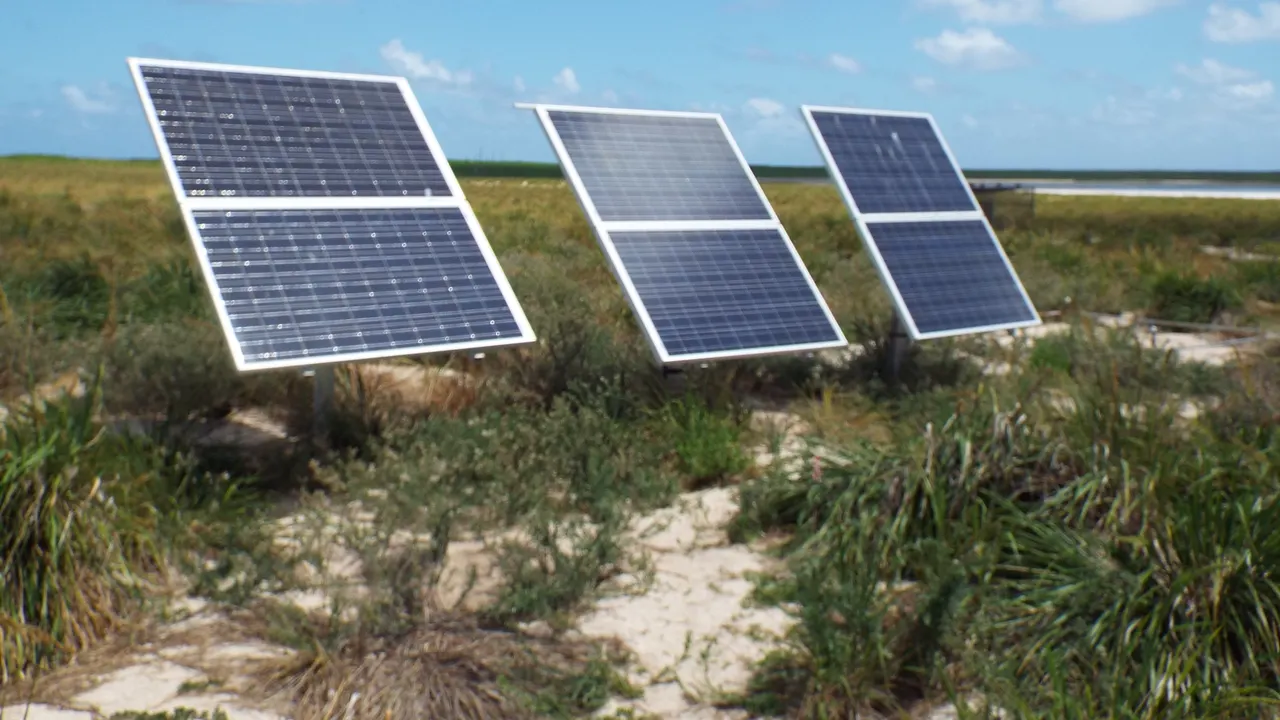
Where you put the panel matters. Bluetti says to "Aim for a spot with direct sunlight from 10 am to 4 pm, when the sun is at its brightest and strongest." 4
Face the sun. In the US, that means south. Bluetti says "portable solar panels facing south will get the most exposure to the sun", and that panels "oriented northward will get the most sunshine if you are in the southern hemisphere". 4
Tilt by season. Bluetti's rule: "During the winter months, you can add 15 degrees to your latitude, while you subtract 15 degrees during the summer." 4
Watch the shade. This one bites. Jackery says "a branch shadow across one cell can cut total output by 50% or more". 1
Move it. Goal Zero says "Adjust your solar panel throughout the day for optimal sun exposure." 3 Jackery's figure: "Reposition every 2–3 hours to boost daily harvest by 25–40%." 1
Keep it clean and tied down. Jackery says to "Wipe panels with a damp microfiber cloth before each use". 1 Goal Zero's tip for when you leave camp: "Use ground stakes to secure your panel while you're away." 3
Goal Zero's Nomad page sums up why your results will differ from the box: "Charge times will vary based on elevation, temperature, time of year, and angle/position of the panel." 3
Plugs, voltage and rain
Panels and stations from different brands don't always fit. Jackery warns that "Open-circuit voltage (Voc) must stay within your station's solar input range (typically 11–60V). Exceeding it damages the MPPT." 1 MPPT is the charge controller that gets the most out of a panel. Jackery says "Most portable power stations have a built-in MPPT". 1
So check the station's manual for its solar input range before you mix brands. Then check the plug. The kit route avoids most of this, because the maker matched the pieces.
On weather, read the IP rating, a code for dust and water resistance. Jackery explains: "IP65: dust-tight, resists water jets — enough for rain and splashes. IP67: temporary submersion." 1 The SolarSaga 200W lists "IP68" and the Nomad 400 lists "Ingress Protection: IP65". 2 3 That rating is for the panel. Your power station has its own limits, so keep it dry unless its manual says otherwise.
Cold mornings matter too. The Explorer 1000 v2 lists a "Charge Temperature" of "32~113 °F (0~45°C)". 2 Below freezing, check your own station's manual before you plug the panel in, and see what makers say about cold-weather charging for LiFePO4.
Two maker kits and their prices
These are examples of what to read on a kit page, as listed on 16 November 2026. We haven't used either, and this isn't a ranking.
Jackery Solar Generator 1000 v2. The "Explorer 1000 v2 + SolarSaga 200W" bundle was listed at "$879.00" (US dollars) on jackery.com, with the note "Sold out due to high demand." 2 Output is "1500W Rated, 3000W Surge peak", and cycle life is "4000 cycles to 70%+ capacity". 2 More of the range is in our walk-through of Jackery's solar generator bundles.
Goal Zero Yeti 1500 + Nomad 400. Goal Zero listed this "Yeti 1500 + Nomad 400 Solar Generator" at "$2,249.95" (US dollars). 3 For the older Yeti 1500X, the Nomad 400 page lists "Yeti 1500X: 4 - 8 Hours" of solar charging. 3 It gives no time for the new Yeti 1500 in that list, so check the station's own page.
Prices move often, so check the maker's store on the day you buy.
The same kit during a power outage
A camping kit can work at home too. Goal Zero says you can "keep it at home so you can still collect power for emergency backup when the grid is down." 3
At home, plug lamps and phones into the station's own outlets. Never connect a station to a wall outlet to feed the house. That's backfeeding. Poudre Valley REA, a Colorado electric co-op, says "Never plug a portable generator directly into a wall outlet or electrical system." 5 It says "A transfer switch helps prevent backfeed by safely isolating the power source from its primary source to a backup or secondary source," and that "Transfer switches should always be installed by a professional". 5 That means a licensed electrician. Our guide to using a power station for home backup covers fridges and routers; click here to read it.
If you're new to the whole idea, the basics of how solar generators work start with the parts inside the box.
Frequently asked questions
How big a solar panel do I need for a camping solar generator?
Jackery's formula is "(Daily Wh needed) ÷ 4 peak sun hours × 1.3 = minimum panel wattage". 1 For a 500 Wh a day camp fridge, it says to "Round up to a 200W panel." 1 Your own load sets the real answer.
How long does a portable solar generator for camping take to charge in the sun?
It depends on the panel, the sun and the battery. Jackery's Explorer 1000 v2 spec table lists "Solar Charging 7.5 Hours" without saying how many panels that assumes, and says "Figures shown are estimates; actual usage varies." 2 Goal Zero says charge times vary with "elevation, temperature, time of year, and angle/position of the panel." 3
Does a solar generator work on a cloudy day?
Yes, but less. Goal Zero says your panel works on a cloudy day and "will just be less efficient." 3 Jackery says output "drops to 10–25% on overcast days". 1
Can I use a different brand of panel with my power station?
Sometimes. Jackery says the panel's open-circuit voltage "must stay within your station's solar input range" and that exceeding it "damages the MPPT." 1 Check the station's manual and the plug type first.
Sources
- Portable Solar Panels for Camping: The 2026 Summer Buyer's Guide to Avoiding Costly Mistakes, Jackery. Checked 16 November 2026.
- Jackery Solar Generator 1000 v2, Jackery. Checked 16 November 2026.
- Nomad 400 Portable Solar Panel, Goal Zero. Checked 16 November 2026.
- Best Spots and Directions for Placing Portable Solar Panels, Bluetti. Checked 16 November 2026.
- Beware of Backfeed, Poudre Valley REA. Checked 16 November 2026.
- Back to Basics: What is a Solar Generator?, Goal Zero. Checked 16 November 2026.